Dubbed and Desperate: Inside the Frantic Race to Get English Dubs Out Before the Hype Dies
There's a moment every dub fan knows too well. A new season drops, the subtitled version blows up on social media overnight, and suddenly your timeline is nothing but spoilers, reaction clips, and memes you can't fully appreciate because you're still waiting on the English version. By the time the dub finally lands, half the discourse has moved on. The hype window? Closed.
That gap — the stretch of time between a subbed release and its dubbed counterpart — used to be measured in months, sometimes over a year. Now, dubbing studios are fighting tooth and nail to compress it down to weeks. Some are even attempting simultaneous or near-simultaneous releases. It sounds like a win for fans. But spend some time talking to the people actually making these dubs, and a more complicated picture starts to emerge.
The Old Way Is Dead
For most of anime's Western history, dubs were an afterthought — a product for kids who couldn't read fast enough, or for casual viewers who wanted background noise. Studios had time. They could take a finished, fully aired season, license it, spend months casting and recording, and release it on DVD a year later to a patient audience.
That world is gone. Streaming changed everything. Crunchyroll, Funimation (now folded into the same ecosystem), Netflix, and Amazon Prime have all made speed a competitive advantage. When Crunchyroll announced its "SimulDub" format back in 2015, it felt like a moonshot. Now it's practically the industry standard expectation — even if the reality of pulling it off consistently is anything but simple.
"The audience doesn't really understand what goes into a four-episode turnaround," one voice director told us, speaking on background to avoid industry blowback. "They see the product and they think it just... appeared. But we're sometimes recording lines for an episode before we've even seen the final animation. You're making creative decisions in a vacuum."
Tech to the Rescue — Sort Of
To hit these compressed timelines, studios have leaned heavily into technology. AI-assisted lip-sync matching tools have gotten genuinely impressive in recent years, helping adapters find English phrasing that fits mouth flaps without requiring animators to rework anything. Automated script timing software has cut hours off the pre-production process. Remote recording — normalized during the pandemic — means studios can pull from voice talent pools across the country without flying anyone to LA or Dallas.
But tech only gets you so far. The creative work — the actual performance, the emotional nuance, the split-second decision about whether a character sounds scared or angry — still requires human beings doing their best under serious time constraints.
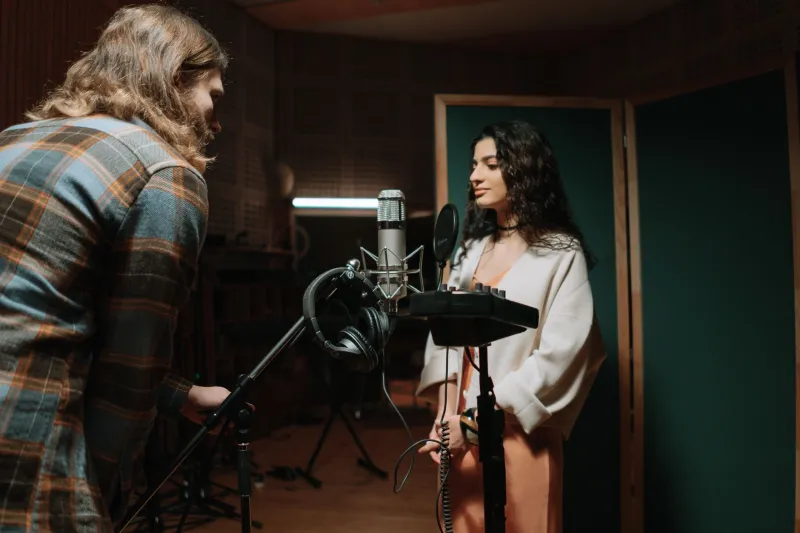
And those constraints are getting tighter. Multiple voice actors we spoke with described sessions that run five, six, sometimes seven hours for a single recording block, covering multiple episodes in a row. "You lose your voice before you lose your motivation," one actor said with a laugh that didn't quite reach their eyes. "But the schedule is the schedule."
Quality: The Uncomfortable Conversation
Here's where things get spicy. Dub quality is notoriously subjective — what sounds natural to one listener sounds wooden to another. But even accounting for taste, there's a growing sense among hardcore fans that the speed push has introduced inconsistencies that wouldn't have slipped through under older production timelines.
Adaptation scripts are a flashpoint. A good dub script doesn't just translate Japanese dialogue — it rewrites it to feel natural in English while preserving character voice, humor, and emotional beats. That process takes time and multiple revision passes. When deadlines shrink, revision passes get cut. The result can be lines that feel clunky, jokes that don't land, or character voices that drift across episodes because there wasn't time to maintain consistency checks.
"There's a reason the dubs people remember fondly — Cowboy Bebop, Trigun, Black Lagoon — took as long as they took," one veteran adapter pointed out. "Nobody was rushing Steve Blum. The craft had room to breathe."
To be fair, some SimulDub releases have been genuinely excellent. My Hero Academia's English cast has built a loyal following that rivals the sub fandom. Demon Slayer's dub has been widely praised. Speed doesn't automatically mean bad. But the margin for error is razor-thin, and when a rushed dub stumbles, fans notice — and they post about it immediately.
The Fandom Pressure Cooker
It's worth asking: who's actually driving this? Studios are responding to demand, sure. But that demand is being amplified and distorted by a fandom culture that treats hype cycles like sprints. A show trends on Twitter for a week. Discourse peaks, memes peak, fan art peaks. Then the algorithm moves on.
Dub fans who want to participate in that cultural moment in real time are stuck. They can either watch the sub — which many prefer not to for a variety of valid reasons — or they can wait and accept arriving late to the party. Studios see that frustration and respond by pushing production timelines harder.
It's a feedback loop, and nobody's quite sure how to break it without someone losing something. Fans lose real-time relevance. Studios lose competitive positioning. Voice actors and adapters lose the breathing room that makes their best work possible.
What Sustainable Actually Looks Like
Some industry voices are cautiously optimistic that a middle ground exists. The answer might not be SimulDubs for every single title — instead, a tiered approach where high-profile, high-budget shows get the fast-track treatment while smaller titles are given longer, more sustainable production windows.
Others point to better pre-production collaboration with Japanese studios as a potential fix. If English dubbing teams could access scripts and rough animation earlier in the production pipeline — before the Japanese version even airs — they could start adaptation work months ahead of schedule rather than scrambling after the fact.
Neither solution is simple, and both require buy-in from multiple parties across different countries and corporate structures. But the alternative — continuing to run the current system hotter and faster until something breaks — seems worse.
For now, the race continues. Somewhere right now, a voice actor is on hour five of a recording session, a script adapter is cutting a joke that needed one more pass, and a dub fan is refreshing their streaming app hoping today's the day the English version drops.
The hype window won't wait. And neither, it seems, will anyone else.