Manga DNA: How Japanese Visual Storytelling Cracked the Gen Z Content Code
Scroll through TikTok for ten minutes and you'll spot it. That dramatic speed-line zoom on someone's shocked face. The panel-split edit cutting between reactions like a manga page layout. The black-and-white ink aesthetic overlaid on a video clip. The bold, chunky sound effect text — BOOM, CRACK, GASP — stamped across the frame like it came straight out of a Shonen Jump spread.
Manga aesthetics have infiltrated short-form content so thoroughly that a lot of Gen Z creators don't even realize they're borrowing from a 70-year-old visual tradition. But the influence is undeniable — and it's reshaping how an entire generation tells stories online.
The Visual Grammar Nobody Taught You (But You Already Know)
Manga has always been more than just comics. It's a complete visual language — one built on efficiency, emotional impact, and the ability to convey motion and feeling through static images. Speed lines communicate velocity. Sweat drops signal anxiety. Chibi-style exaggeration punctuates comedy. Panel sizing controls pacing like a film editor controls a cut.
These aren't arbitrary stylistic choices. They're a refined system developed over decades by artists like Osamu Tezuka, who drew from both cinematic techniques and traditional Japanese art to create something entirely new.
The thing is, that visual grammar translates perfectly to the constraints of short-form digital content. TikTok and Instagram Reels give creators roughly 15 to 60 seconds to land an emotional punch. Manga has been solving that exact problem — maximum impact, minimum real estate — since the 1950s.
Gen Z didn't consciously decide to adopt manga techniques. They just recognized, instinctively, that they work.
Webtoons Opened the Door
Before TikTok aesthetics went full manga-mode, webtoons kicked the door open.
Platforms like LINE Webtoon and Tapas brought Korean-influenced digital comics — vertically scrolling, full-color, optimized for smartphone reading — to massive US audiences starting in the early 2010s. Titles like Lore Olympus, unOrdinary, and I Love Yoo built fanbases in the millions, many of them young American readers who had never picked up a traditional manga volume.
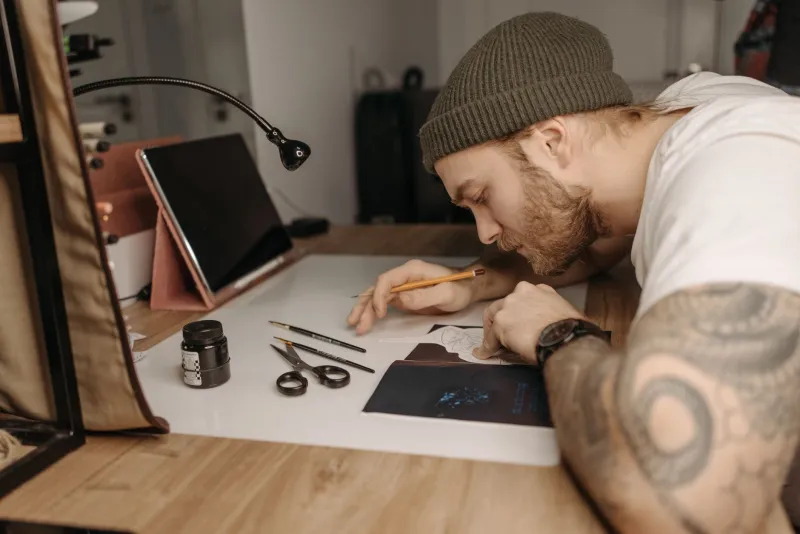
Webtoons democratized the format. Suddenly, anyone with a drawing tablet and a story idea could publish serialized visual fiction to a global audience. The barrier to entry dropped through the floor.
The result? An explosion of independent creators who grew up absorbing manga and anime aesthetics and started applying them to original stories — stories rooted in American experiences but told through a distinctly Japanese-influenced visual framework.
Creator Mia Kowalczyk, who runs the Instagram webtoon Static Hearts with over 340,000 followers, described her process in a recent interview: 'I grew up reading Fruits Basket and Fullmetal Alchemist. When I started making my own comics, I wasn't trying to copy manga — I just naturally drew the way I'd been reading for fifteen years. The panel compositions, the way I use close-ups for emotion, the sound effects — it's all in my DNA at this point.'
The TikTok Edit That Changed Everything
In 2021, a specific type of video started going massively viral: the 'manga edit.' Creators would take clips from live-action films, TV shows, or even real life, then layer on manga-style visual effects — ink outlines, panel borders, dramatic zoom-ins, Japanese onomatopoeia text — to transform the footage into something that looked ripped from an anime adaptation.
These edits weren't just cool aesthetically. They were funnier, more dramatic, and more emotionally resonant than the original clips in many cases. A mundane moment became cinematic. A tense scene became legendary.
The trend exploded. Tutorials appeared. CapCut templates with manga-style effects racked up millions of downloads. By 2022, the manga edit had become one of the defining visual styles of Gen Z content creation — right alongside vaporwave aesthetics and Y2K fashion filters.
What's fascinating is the cross-cultural translation happening here. American creators are taking Japanese visual techniques, applying them to Western source material, and producing something that resonates with audiences who may have never read a single manga chapter. The aesthetic has fully escaped its origin point.
The Creators to Watch Right Now
The space is genuinely bursting with talent. A few names worth knowing:
@inkpulsestudio on TikTok has built a following of over 800K by posting real-time manga-style illustration of trending pop culture moments — think sports highlights, award show drama, and celebrity news rendered in clean black-and-white ink panels. It's journalism meets comics in the most Gen Z way imaginable.
Priya Nair, who goes by @priyaframes on Instagram, creates original webtoon-style stories exploring South Asian-American identity using manga composition techniques. Her use of negative space and panel pacing has drawn comparisons to Inio Asano's work, which she lists as a primary influence.
Tyler Voss runs a YouTube channel dedicated to 'manga cinematography' — breaking down how manga panel layouts translate to film editing and vice versa. His videos regularly pull 500K+ views and have become required watching in several college digital media courses.
These creators aren't niche. They're mainstream. And they're proof that manga's visual influence has fully crossed over.
Why US Audiences Can't Get Enough
There's a psychological dimension worth exploring here. American visual media — especially superhero comics and mainstream animation — has historically prioritized clarity and literalism. Show the action. Explain the emotion. Leave little to interpretation.
Manga operates differently. It trusts the reader. Implied motion. Suggestive framing. Emotional ambiguity that readers fill in themselves. That participatory quality — the sense that you're co-creating the experience — is deeply engaging, especially for audiences raised on interactive media.
Gen Z, more than any previous generation, expects to be active participants in their media rather than passive consumers. Manga's visual language, which invites interpretation and rewards close reading, aligns perfectly with that expectation.
What Comes Next
The trajectory points toward even deeper integration. AI art tools trained on manga aesthetics are already enabling creators with zero drawing ability to produce manga-style visual content at scale. Vertical scroll formats are expanding beyond webtoons into interactive fiction apps and even experimental journalism.
More significantly, major entertainment studios are starting to take notice. Pitches for 'manga-style' animated series aimed at US streaming audiences have reportedly increased significantly in Hollywood over the past two years. The aesthetic is moving from the creator economy into the mainstream pipeline.
Manga didn't just influence Gen Z content — it gave an entire generation a new visual language. And they're running with it at full speed.